 Immunity
 Digestion
 Sleep & Mood
 Mental Clarity
 Joints & Mobility
 Women
Women Men
Men




Section
- SHOP

- LEARN
- ABOUT US
- SUSTAINABILITY



Join our network for mutual growth
Back
What is a Moringa Latte? The Best Green Power Up
12/03/2025 | Written by Kristen Boye
Live Vibrantly
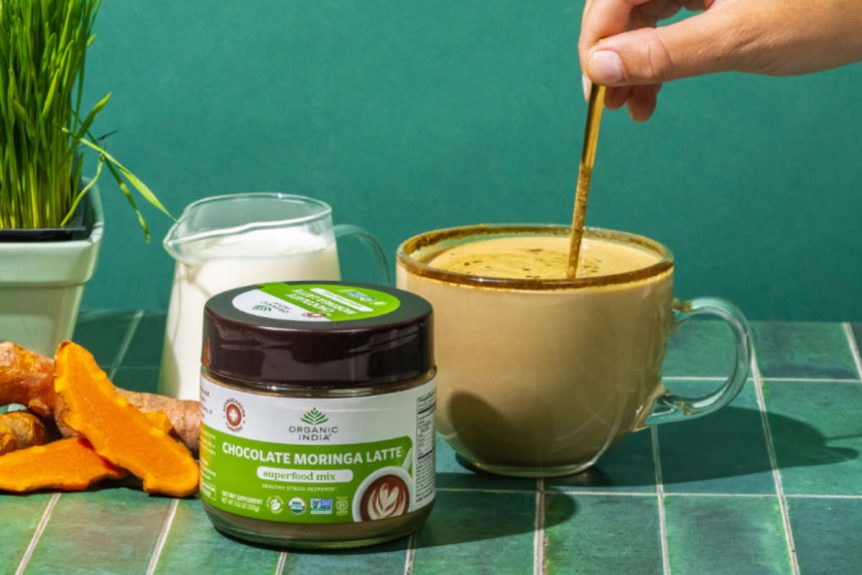
Rich, smooth, sweet, grassy, and slightly bitter Moringa lattes offer the perfect way to enjoy more lattes without the jitters and crashes of caffeine.
So, what is a moringa latte and how do you make it?
It all comes down to using high-quality Moringa, getting your milk-to-Moringa ratio right, and knowing which accouterments to add for the perfect, customized flavor.
Come along as we explore how to transform this cherished Ayurvedic herb into a health-promoting, energizing, and delicious Moringa latte, plus answer your FAQs.
What is a Moringa Latte?
Moringa lattes are made by combining the ancient Ayurvedic herb Moringa with steamed milk or plant milk, and an optional sweetener.
What is Moringa?
Although Moringa lattes are a relatively new invention, Moringa, also known as “the tree of life,” has been enjoyed as a culinary ingredient, functional food, and traditional herb in Ayurveda for centuries.
Moringa’s newfound popularity in lattes is due to three factors:
- Its flavor profile: Which is unique yet somewhat similar to green tea and Matcha.
- Its superfood status: Moringa is a green superfood known as “the miracle tree” in India, with antioxidant properties and bioactive benefits.
- It’s natural caffeine-free energizing properties: Which come from its nutrient profile.
Those looking for a caffeine-free latte base with impressive health benefits can’t go wrong with Moringa.
Related reading: Superfood Moringa: The Gift Of Clean Energy
What Does Moringa Taste Like?
As mentioned previously, Moringa’s flavor is all its own, but slightly resembles that of matcha.
Its flavor profile is often described as:
- Earthy
- Grassy
- Spicy
- Pungent
- Astringent
Purists enjoy Moringa straight-up in a strong tea and appreciate its bitter, earthy flavor.
Others find Moringa’s flavor too intense on its own, but love how it mingles with the softer, sweeter flavor of milk or plant milk plus additions like cocoa or coconut sugar.
Moringa is also delicious combined with other herbs, like Tulsi, in herbal teas.
What are the Benefits of Drinking Moringa Lattes?
Few hot beverages, caffeinated or otherwise, can rival the health benefits of consuming Moringa in latte form or otherwise.
Also known as “nature’s multivitamin”, Moringa provides several health benefits, including:
- Clean energy from whole foods nutrition
- No caffeine crashes (Moringa is naturally caffeine-free)
- Cholesterol support
- Easy preparation
- Support for metabolic function
- Cognitive support
- Brighter, healthier skin
- More graceful aging
- Oral microbiome support
Moringa is also more affordable than other latte bases, is considered a nutritive supplement, and marries beautifully with Matcha for a more caffeinated energy boost.
Related reading: Moringa vs Matcha: Which to Latte?
3 Ways to Make the Perfect Moringa Latte
Making a Moringa latte isn’t that different from other lattes, but proportions and technique count.
Here are three ways to make the perfect morning sipper for energy, vitality, and overall health.
1. Traditional Moringa Latte
This simple latte combines just two ingredients, plus optional sweetener, for the perfect morning, afternoon, or evening latte ritual.
Moringa lattes can be prepared the same way as a Matcha latte or even a coffee-based latte, in a frother or on the stove, depending on how you like to latte!
Serves 1
Ingredients
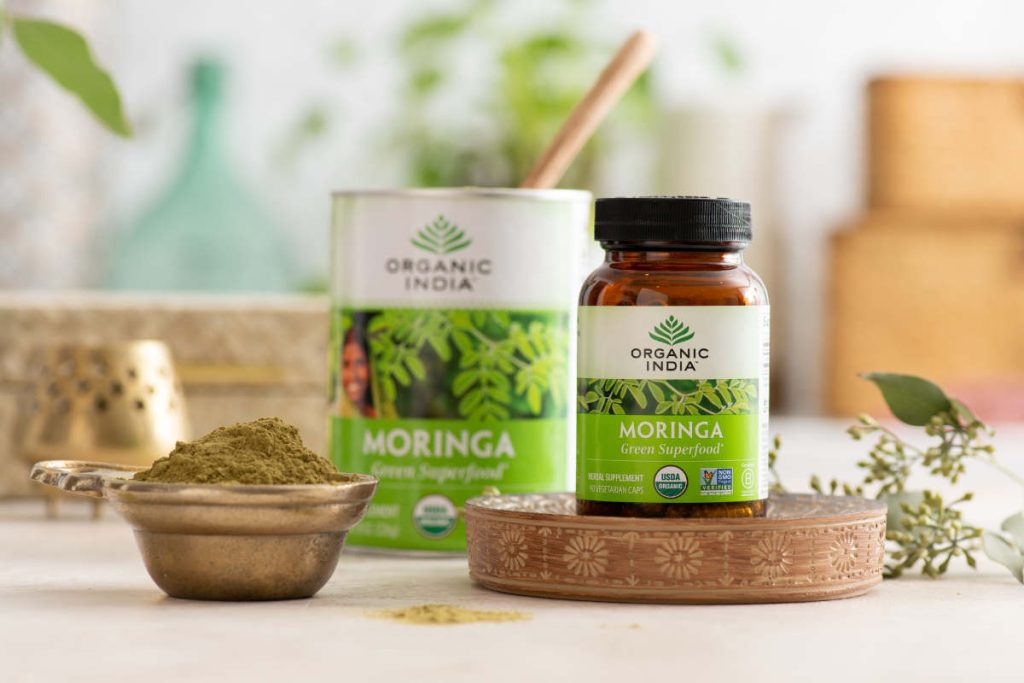
- 1/2 to 1 teaspoon Organic India Moringa Powder
- 1/4 cup hot water
- 1 cup milk or unsweetened plant milk
- Natural sweetener of choice
- Optional accoutrements: vanilla, cocoa, cinnamon, cardamom, nutmeg, black pepper, turmeric, ginger
How to Make
- In a small bowl, combine Organic India Moringa Powder with 1 tablespoon hot water, whisk vigorously or use a frother until the Moringa dissolves and the mixture is frothy on top.
- Alternatively, combine the Moringa with hot water in a small jar, then don a heatproof glove and shake vigorously.
- Pour into a mug.
- Heat your milk on the stove or using a frother until nice and hot.
- Add the warm milk to the Moringa mixture, stir to combine, and sweeten if desired.
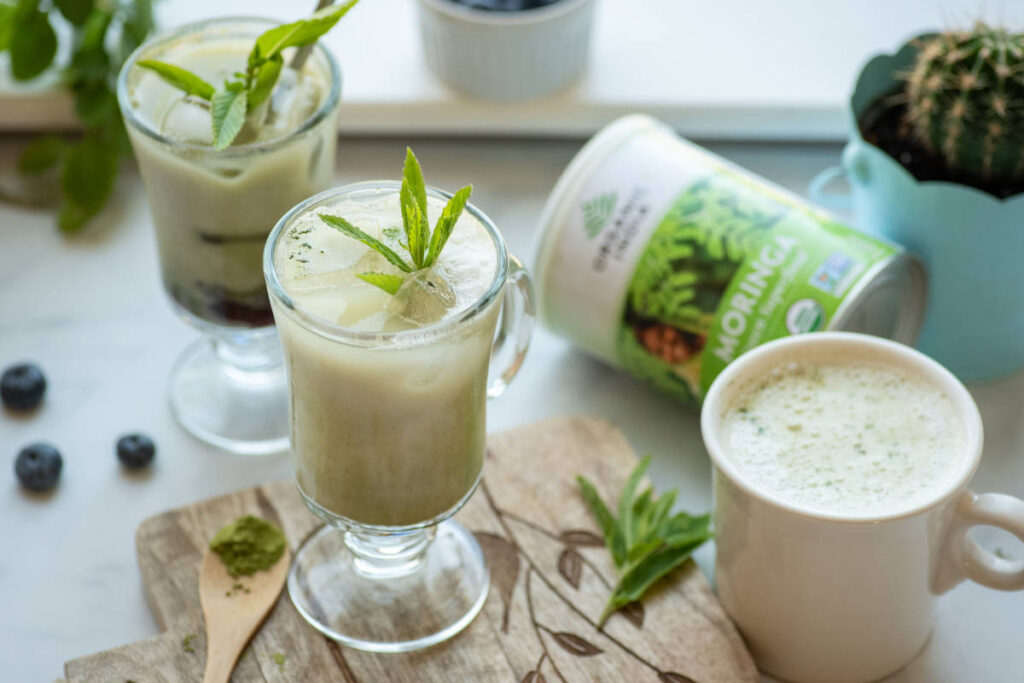
2. Moringa Matcha Latte (caffeinated), Traditional or Iced
This latte combines the complementary flavors and benefits of Moringa plus Japanese Matcha to create a half-caf, superfood green latte.
Serves 1
Ingredients:
- 1/2 to 1 Teaspoon Matcha (ceremonial grade if possible)
- 1/2 to 1 Teaspoon Organic India Moringa Powder
- 1/4 cup hot water
- 1 cup unsweetened plant milk of choice (3/4 for iced)
- Optional accoutrements: vanilla and natural sweetener of choice
Method:
- In a small bowl, combine Matcha powder with Organic India Moringa Powder and whisk vigorously with a matcha whisk, small whisk, or frother until Moringa is dissolved and the mixture is frothy on top.
- Alternatively, combine the Moringa with hot water in a small jar, then don a heatproof glove and shake vigorously.
- Pour into a mug.
- Warm milk or plant milk over medium heat until steaming. Remove from heat and, if desired, froth with a handheld frother or whisk.
- Add the warm milk to the Moringa mixture, stir to combine, and sweeten if desired.
For cold prep instructions, see: Delicious Matcha Moringa Latte (non-dairy, iced or hot)
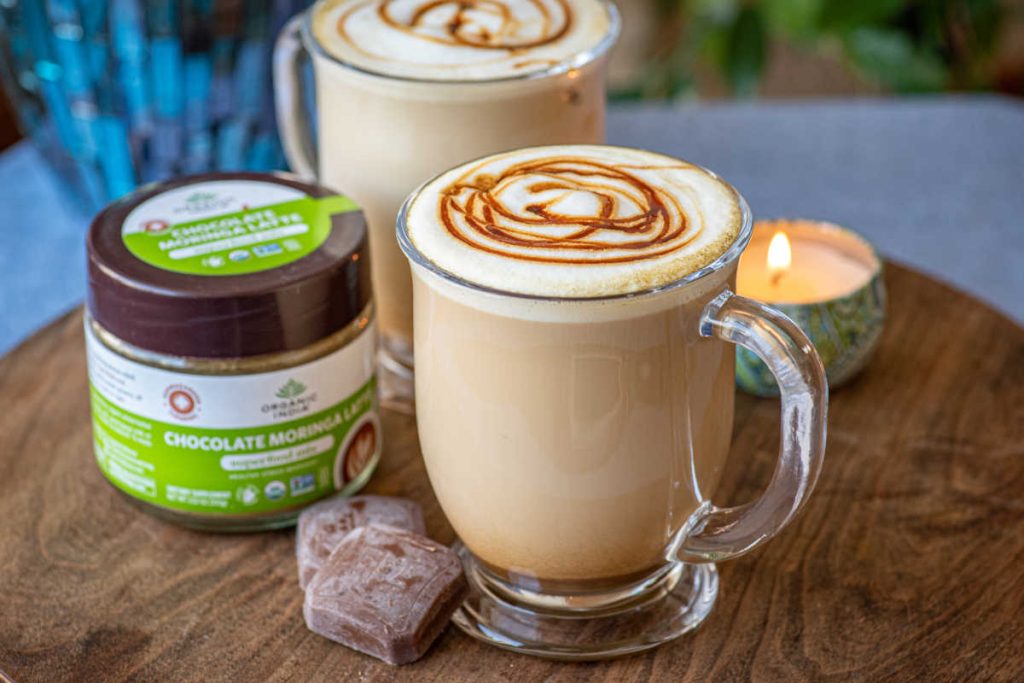
3. Organic India Chocolate Moringa Latte
This instant Moringa Latte utilizes Organic India Chocolate Moringa Latte mix and is sweet, smooth, and euphoric!
Serves 1
To make:
- Warm 8-10 ounces of milk, plant milk, or water.
- Stir in 2 teaspoons of Chocolate Moringa Latte mix.
- Use a whisk or frother for an extra luxurious treat.
- Sweeten as desired (mix already contains natural stevia, so taste first).
- To enjoy cold, chill and pour over ice.
Organic India Chocolate Moringa Latte combines energy-supportive adaptogens like Ashwagandha and Gotu Kola with organic Cacao and complex spices like cinnamon, cardamom, and black pepper, creating a burst of flavor and energy with every sip.
One jar contains 20 servings.
Organic India: Your Moringa Latte Source
If you’re looking for clean, great-tasting Moringa for lattes, look no further than Organic India.
For decades, our community of growers has pioneered the cultivation and harvesting of high-quality, organic, regeneratively grown, purity-tested, Fair Trade Certified, non-GMO, hand-picked Moringa.
For Moringa lattes, we recommend
We also offer
Looking for More Moringa Recipes?
Moringa’s now just for lattes! Discover more delectable ways to get more Moringa, in:
- Mango Moringa Green Smoothie
- Winter Greens Bowl With Moringa
- The Best Vegan Moringa Pistachio Cookies
- Miso Moringa Edamame Dip
- Miso Moringa Noodle Soup
Moringa Latte FAQs
Now that you know how to make the perfect Moringa latte, we’ll answer some FAQs.
Q: What’s the difference between Moringa Tea vs. Moringa Latte?
A: A Moringa latte combines Moringa with warm or cold milk that is typically frothed.
Moringa tea is made with just hot water and Moringa, or other complementary herbs, such as Organic India.
Q: What is the best Moringa powder for lattes?
A: The best Moringa powder for lattes is ideally organic and finely-ground for easy mixing.
We recommend Organic India Moringa Powder or Chocolate Moringa Latte, both grown using regenerative organic practices and gently ground to a fine powder for easy mixing.
Q: Does Moringa have caffeine?
A: No. Moringa is naturally caffeine-free.
Q: Does Moringa give you energy?
A: Yes. Moringa’s nutrients, like iron, antioxidants, and vitamins, help provide a natural source of energy without the jitters and crashes of caffeine.
Many people feel this immediately and, over time, as they consume Moringa consistently.
Q: Is Moringa the same as matcha?
A: No, Moringa comes from the Moringa Tree (Moringa oleifera), and Matcha comes from the Camellia sinensis plant, the same plant as green and black tea.
Learn more in: Moringa vs Matcha: Which to Latte?
About the Author: Kristen Boye
 Kristen Boye is a freelance natural health and green living writer, copywriter, and editor. Kristen was raised on an organic farm in British Columbia which inspired her life’s work. She holds a Bachelor’s Degree in Natural Health, is a Certified Natural Foods Chef, a medicinal herb farmer, natural foods advocate, and is obsessed with writing, homesteading, researching, regenerative agriculture, and words in general. Kristen lives with her husband and two children on their medicinal herb farm in Western North Carolina. Visit her online at: www.holisticwritingconcepts.com.